

Timing, Benefits, and Recovery Involved with Fixing a Pet
Choosing to spay or neuter a pet is one of the most significant decisions a pet owner in Tigard or Beaverton can make. It is a choice that moves beyond simple medical necessity and enters the realm of community stewardship. At Nimbus Pet Hospital, we view this procedure as a foundational element of responsible pet ownership.
- Optimizing the Surgical Window: Developmental Milestones
- Proactive Pathophysiology: Evaluating Longitudinal Health Dividends
- Navigating the Clinical Experience at Nimbus Pet Hospital
- Mastering the Convalescence Phase: Home-Care Strategies
- Why Local Expertise Matters: The Nimbus Advantage
- Community Insights: Frequently Asked Questions
- Solidifying Your Pet’s Health Legacy
When we talk about “fixing” a pet, we are really talking about setting the stage for a longer, healthier, and more harmonious life within your home. The intersection of animal welfare and household peace is where this surgery truly shines. By choosing sterilization, you are not only preventing unplanned litters but also contributing to a more stable pet population in our local Pacific Northwest neighborhoods.
There are many myths circulating in local communities regarding how these surgeries affect a pet’s spirit. Some worry that their dog will lose its protective instinct or that their cat will become less affectionate. These procedures do not fundamentally alter the unique personality that makes your pet who they are. Instead, they often remove the “background noise” of hormonal drives. This allows your pet to focus more on their bond with you rather than the biological urge to find a mate. It is a proactive step that ensures our local community remains a safe and manageable environment for all animals.
Optimizing the Surgical Window: Developmental Milestones
Determining the right time for a spay or neuter procedure has evolved significantly in recent years. There was once a time when a standard six-month rule applied to every animal, but modern veterinary medicine recognizes that every pet is an individual. At Nimbus Pet Hospital, we analyze the specific developmental milestones of your pet to find the perfect clinical window.
Canine Timelines: The schedule is often dictated by breed and expected adult size. Small and toy breeds typically reach skeletal and hormonal maturity much faster than their larger counterparts. For a Chihuahua or a Yorkie, the traditional six-month mark is often ideal. However, for giant breeds like Great Danes or Golden Retrievers, we often discuss the benefits of waiting until the dog is closer to twelve or even eighteen months old. This delay allows the growth plates in their bones to close properly under the influence of natural hormones, which can reduce the risk of certain orthopedic issues later in life.
Feline Timelines: Cats are notoriously prolific, and their reproductive cycles can begin as early as four months of age. To prevent the stress of a heat cycle or an accidental pregnancy, we generally recommend spaying and neutering kittens by the time they reach five or six months. The biological drive in cats is incredibly strong, and acting within this window prevents behaviors like territorial spraying and loud vocalization that can disrupt a quiet Tigard or Beaverton home.
The “wait or act” debate is something we navigate with every client. We balance the risk of early-age procedures against the massive benefits of preventing the very first heat cycle. Statistically, spaying a female dog before her first heat cycle almost entirely eliminates the risk of mammary tumors. Our team works with you to weigh these variables, ensuring the timing aligns with your pet’s specific health trajectory.
Proactive Pathophysiology: Evaluating Longitudinal Health Dividends
The benefits of spaying and neutering are often discussed in terms of behavior, but the medical “dividends” are where the real value lies. From a physiological standpoint, sterilization acts as a form of preventative oncology.
For female pets, spaying involves the removal of the ovaries and usually the uterus. This eliminates the possibility of uterine cancer and a life-threatening infection known as pyometra. Pyometra is an emergency condition where the uterus fills with toxins and bacteria, and it is a common reason for older, unspayed pets to require high-risk surgery. By spaying early, you remove this danger entirely.
For male pets, neutering removes the risk of testicular cancer and significantly lowers the incidence of certain prostate problems. Beyond cancer prevention, we must consider the behavioral stabilization factor. Many of the pets that go missing in the Tigard and Beaverton area are intact males who have picked up the scent of a female in heat. This roaming instinct leads pets to jump fences, dig under gates, and wander into traffic. Sterilization reduces this hormone-driven wanderlust, keeping your pet safely within the confines of your yard.
- Reduction in Aggression: Neutering can decrease certain types of hormonal aggression and territorial marking.
- Increased Lifespan: Studies consistently show that sterilized pets live longer on average due to a lower risk of trauma and infectious diseases.
- Healthier Skin and Coat: Hormonal imbalances can sometimes lead to skin issues, which are stabilized after the procedure.
- Financial Savings: Preventing a single emergency like pyometra or a litter of puppies is far more cost-effective than the one-time cost of the surgery.
Navigating the Clinical Experience at Nimbus Pet Hospital
We understand that the thought of your pet undergoing surgery can be stressful. This is why we have designed our surgical suite at Nimbus Pet Hospital to reflect the highest standards of veterinary technology. Our facility is equipped with the advanced monitoring equipment you would find in a human hospital. We believe that every pet, whether they are here for a routine neuter or a complex soft-tissue surgery, deserves the most vigilant care possible.
The process begins long before the first incision. Every patient undergoes a pre-anesthetic wellness exam and comprehensive blood chemistry panels. This allows us to ensure that your pet’s liver and kidneys are functioning well enough to process the anesthesia safely. We do not believe in cutting corners when it comes to diagnostics. Knowing your pet’s internal health status is the only way to provide a truly safe anesthetic experience.
Once in the operating room, our technicians use advanced intraoperative monitoring to track vitals in real-time, including:
- Oxygen Saturation: Ensuring the blood is carrying enough oxygen to the tissues.
- ECG/Heart Rate: Monitoring the heart’s electrical activity for any irregularities.
- Blood Pressure: Maintaining stable pressure to protect internal organs during the procedure.
- Core Body Temperature: Using warming blankets to prevent hypothermia while under anesthesia.
Pain management is another cornerstone of our approach. We utilize a multimodal strategy, meaning we use different types of medications that work together to block pain at various points in the nervous system. We often use localized nerve blocks in addition to systemic analgesics so that when your pet wakes up, they are comfortable and calm. Our goal is for the transition from the hospital back to your home to be as seamless as possible.
Mastering the Convalescence Phase: Home-Care Strategies
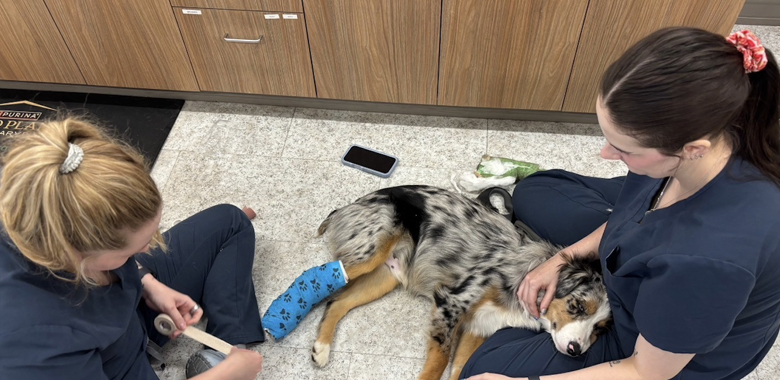
The 10 to 14 days following surgery are critical for a successful outcome. As a pet owner, you become the primary care provider during this recovery period.
The first step is what we call “environmental engineering.” You will need to create a low-activity zone in your home. For active dogs, this might mean using a crate or a small room where they cannot jump on furniture or run up and down stairs. Physical exertion can cause the internal or external sutures to pull apart, a complication known as dehiscence, which may require a second surgery to repair.
Monitoring the incision site is a daily responsibility. It is normal to see a small amount of redness or slight swelling in the first 24 to 48 hours. However, you should be on the lookout for signs that require a call to our office:
- Active Bleeding or Oozing: Any discharge that is bright red or looks like pus.
- Gapping Incisions: If the edges of the wound appear to be pulling apart.
- Excessive Heat: If the area around the incision feels hot to the touch compared to the rest of the body.
- Foul Odor: A strong, unpleasant smell coming from the surgical site.
Nutrition is another factor that many owners overlook. Once a pet is fixed, their metabolism often slows down slightly because they are no longer spending energy on reproductive drives. We recommend monitoring their weight closely in the months following surgery. You might need to adjust their caloric intake or increase their structured exercise once they are fully cleared for activity. Keeping your pet at a lean, healthy weight is one of the best ways to support their joints and overall longevity.
Why Local Expertise Matters: The Nimbus Advantage
In today’s world, there are many high-volume, low-cost clinics that offer sterilization services. While these facilities serve a purpose, they often lack the continuity of care that a primary care hospital provides. At Nimbus Pet Hospital, we believe there is immense value in having your pet’s surgery performed by a team that knows their full medical history. We aren’t just seeing a “patient number” on a surgical log; we are seeing the puppy we vaccinated or the cat we treated for dental health issues last year.
Our local facility provides a convenient and accessible home base for all your pet’s needs. If you have a question during the recovery phase, you aren’t calling a distant corporate hotline; you are calling the local team you trust. This proximity is vital for post-operative follow-ups or if you simply need peace of mind regarding how the incision is healing.
Furthermore, we view spaying and neutering as just one piece of the puzzle. Our holistic approach integrates surgical care with dental health, diagnostic imaging, and routine vaccinations. When you bring your pet to us, we are looking at their entire life cycle. We want to be the partner you turn to for every milestone, ensuring that the care they receive at six months old sets them up for success when they are senior companions.
Community Insights: Frequently Asked Questions
How do I locate the Nimbus Pet Hospital facility for a surgical drop-off?
Our hospital is centrally located to conveniently serve pet owners throughout the Tigard and Beaverton areas. We provide ample parking and a welcoming lobby to make your morning drop-off as stress-free as possible, allowing for a quick and easy commute before your workday begins.
What are the specific intake hours for surgical patients at your local office?
For surgical procedures, we typically ask owners to arrive for check-in between 8:00 AM and 8:30 AM. This allows our medical team to perform the pre-surgical exams and bloodwork before the morning’s procedures begin. We will give you a specific time during your pre-operative consultation so you can plan your day accordingly.
Does Nimbus Pet Hospital offer bundled wellness packages that include sterilization for new puppies or kittens?
We believe in making high-quality care accessible. We offer various wellness plans that bundle essential puppy and kitten services, including vaccinations, exams, and sterilization. These packages are designed to provide a comprehensive start to your pet’s life while spreading the cost of care over time.
Is a preliminary wellness exam mandatory before booking a spay or neuter appointment at your clinic?
To ensure the safety of every animal in our care, we do require a preliminary exam for new patients. This allows our veterinarians to listen to the heart, check the lungs, and discuss your pet’s unique needs before they undergo anesthesia. If your pet is already a regular patient at Nimbus, we may be able to schedule the procedure based on their most recent annual exam.
Solidifying Your Pet’s Health Legacy
Spaying or neutering your pet is far more than a routine task to check off a list. It is a profound commitment to their future and a gift of health that lasts a lifetime. By removing the risks of reproductive diseases and stabilizing behavioral urges, you are giving your pet the best possible chance at a long, comfortable life by your side. At Nimbus Pet Hospital, we are honored to be the team you trust with this transition.
We encourage you to reach out to our team to discuss the ideal timing for your pet’s procedure. Whether you have a new kitten or a growing large-breed dog, we will provide the neighborly expertise and modern medical care you expect. Let’s work together to ensure your pet remains a happy, healthy member of the Tigard and Beaverton community for years to come. Give us a call or visit our website to secure your consultation today.